Tahaluf Al Emarat and Saal.ai Sign Strategic MOU to Accelerate Sovereign AI Adoption Across the UAE
Published October 7, 2026 · Abu Dhabi
Partnership pairs UAE-developed AI and big data platforms with enterprise transformation expertise in support of the UAE National AI Strategy 2031
The partnership
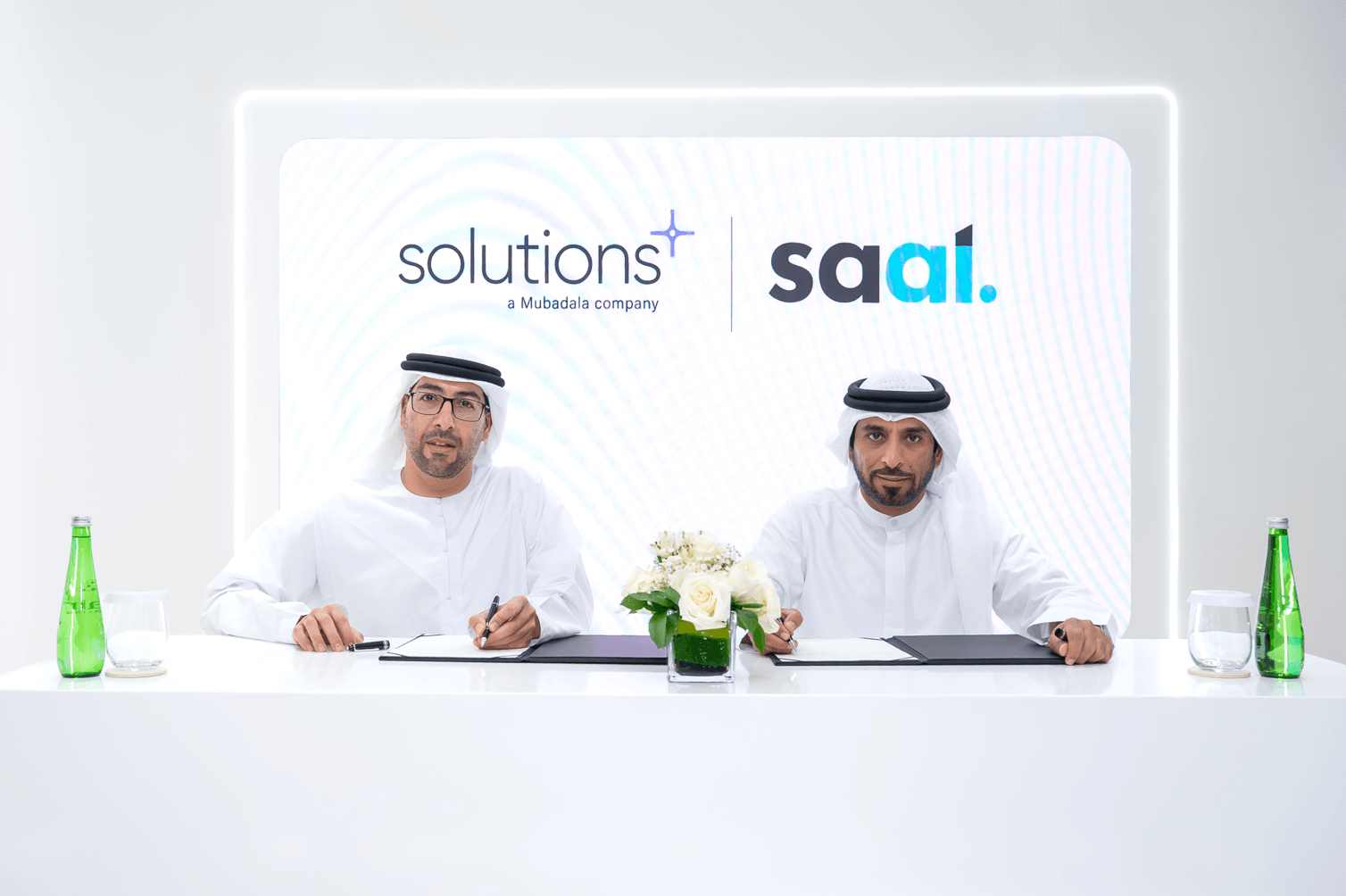
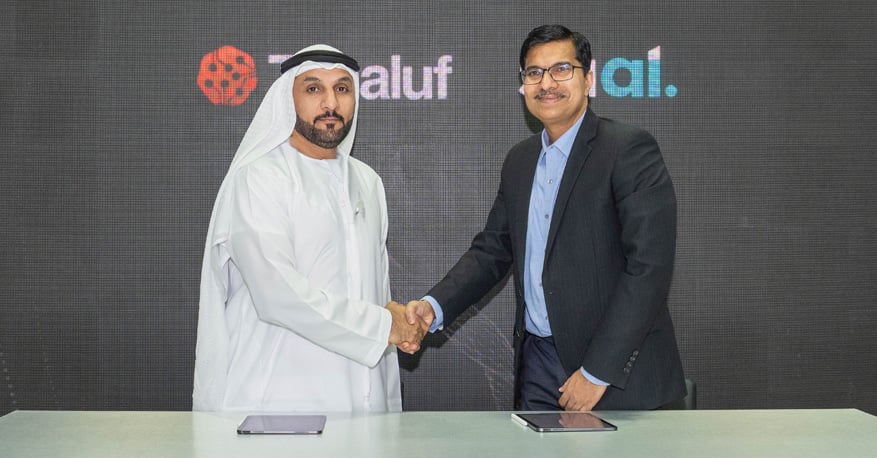
ABU DHABI, UAE — Tahaluf Al Emarat Technical Solutions, a leading UAE technology provider and Saal.ai, a UAE-based developer of sovereign AI and big data software products today announced the signing of a strategic Memorandum of Understanding (MOU) to accelerate enterprise AI adoption across the country's public and private sectors.
The partnership brings together Tahaluf Al Emarat's digital transformation and implementation expertise with Saal.ai's made-in-UAE AI and data software products and platforms to help organizations deploy AI that is secure, well governed and delivers measurable results. It directly supports the UAE National AI Strategy 2031 and its ambition to establish the country as a global leader in artificial intelligence.
As AI moves into critical business and government operations, organizations need solutions that pair advanced intelligence with security, data governance and operational control. The collaboration is designed to help them move beyond experimentation and translate AI investment into tangible gains in productivity, decision-making, automation and service delivery.
Under the MOU
Under the MOU, the two companies will jointly pursue opportunities in sovereign, generative and agentic AI, advanced analytics and intelligent automation across government and enterprise, with a focus on energy, healthcare, education and financial services. They will also support organizations seeking to strengthen their AI readiness through locally developed technologies and architectures that meet enterprise security and data-sovereignty requirements, and contribute to the development of home-grown AI talent.
What the leaders said
Dr. Ahmed Alkaabi, Chief Executive Officer of Tahaluf Al Emarat Technical Solutions, said: "Artificial intelligence is rapidly becoming a strategic capability for governments and enterprises, but successful adoption requires more than technology. It requires trusted partners, strong governance, secure data foundations, and a clear path to measurable outcomes. As the UAE advances the ambitions of the National AI Strategy 2031, the focus is shifting from AI adoption to AI at scale. At Tahaluf, we understand this challenge because we have spent years delivering digital transformation and AI solutions for government and enterprise. Building on our own Arabic-first Agentic AI platform and real-world deployment experience, we are partnering with Saal.ai to combine UAE-developed AI innovation with deep transformation expertise and accelerate the adoption of sovereign, agentic AI. Together, we are helping customers turn AI ambition into real operational outcomes while supporting the UAE's transition from AI adoption to AI leadership through trusted, sovereign, and UAE-developed capabilities."
Vikraman Poduval, Chief Executive Officer of Saal.ai, said: "The UAE has established itself as a global leader in embracing artificial intelligence, and the National AI Strategy 2031 gives the market a clear roadmap for turning that ambition into scalable, real-world impact. Our collaboration with Tahaluf Al Emarat combines sovereign AI capabilities with strong institutional relationships and deployment expertise, so organizations can adopt AI securely and move from experimentation to measurable business and operational outcomes."
Saal.ai's product portfolio
Saal.ai's product portfolio supports the full enterprise AI and data lifecycle and maps directly to the strategy's priorities: AgendiX for agentic AI and intelligent automation, DigiXT for enterprise AI and data applications, GovernX for AI governance and regulation, SovaAI for agentic analytics, DataPrism360 for sovereign data intelligence and infrastructure, Market Hub for market intelligence, and AcademyX for competency development and career growth supporting the national strategy's talent-development objective.
The agreement reflects a shared commitment to secure, scalable and outcome-driven AI, supporting organizations as they evolve from traditional digital transformation to AI-driven operating models.